China Visa Photo Requirements: COVA Upload Specs (2026)
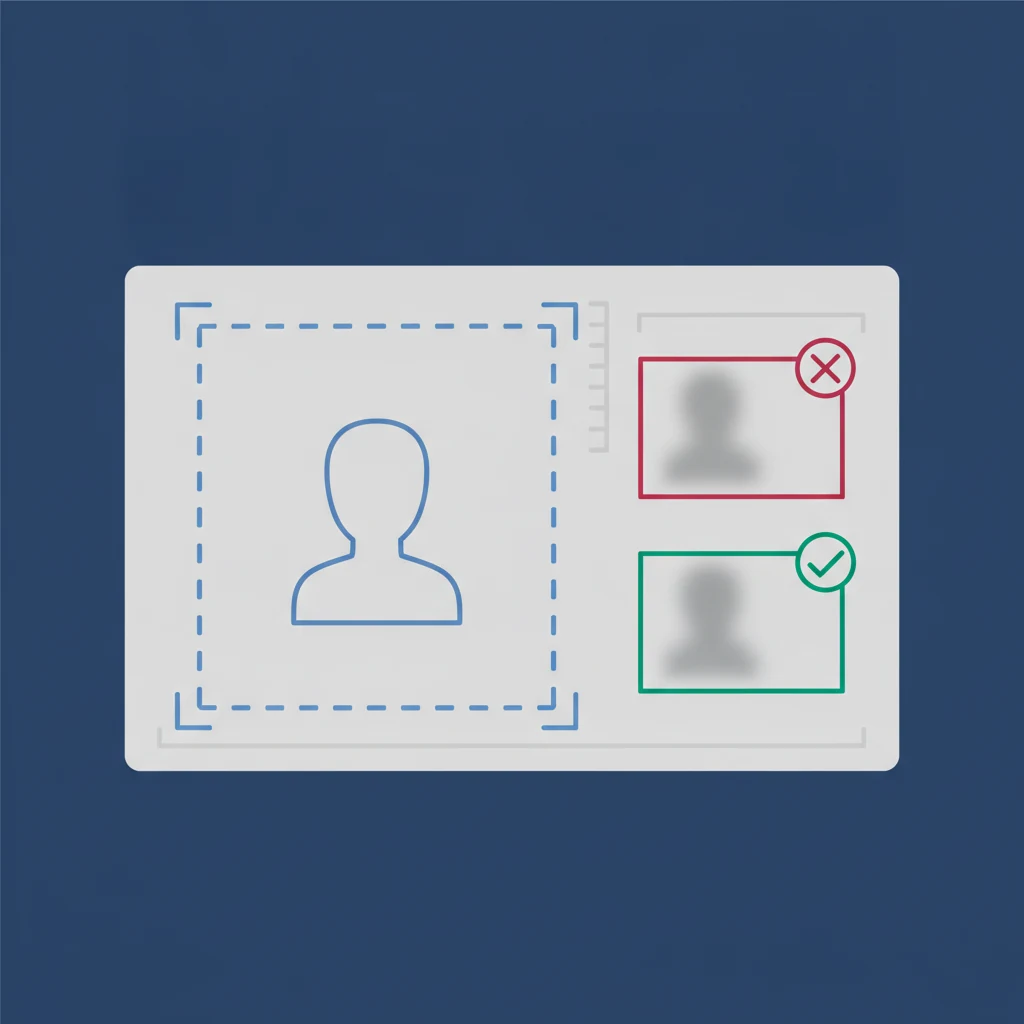
The single fastest way to get your China visa application bounced is to walk into a pharmacy, ask for a "passport photo," and upload the 2×2 inch square they hand you. That square is the US format. China's tourist (L) visa wants something different on almost every axis: a 33×48 mm portrait, and — because you apply through China's online COVA system before you ever hand over a printed copy — a digital file sized to a strict 354–420 px wide, 40–120 KB JPEG on a pure-white background. Miss any of those and the upload rejects, or the visa center hands your paper photo back at the counter.
Here's the exact spec, why the "2×2" advice you'll find everywhere is wrong for China specifically, and how to get a compliant photo on the first try.
You actually need two versions of the same photo
China runs a hybrid application. You first complete the China Online Visa Application (COVA) form and upload a digital photo for a preliminary check. Once that's accepted, you submit your passport and a printed copy in person at a Chinese Visa Application Service Center (CVASC) — the commercial company that processes applications for the embassy and consulates — or at the mission itself. So you're preparing one photo to two specs at once: the pixel/file-size rules for the COVA upload, and the physical print rules for the counter. They describe the same portrait, but the digital one is where most people get stuck.
354×472 px min to 420×560 px max
33 mm wide × 48 mm tall
3:4 portrait (not square)
28–33 mm, chin to crown
JPEG only, 40–120 KB, 24-bit color
Pure white, no shadows
Not permitted (any kind)
Taken within last 6 months
Why "2×2 inch" is the wrong advice for China
Most passport-photo guides quietly assume the US standard, because that's their biggest audience. But the US 2×2 inch (51×51 mm) photo is square, and China's is a 3:4 portrait. You can't just trim a square to fit — cropping a 51×51 mm photo down to 33×48 mm pushes the head out of the 28–33 mm band, and the COVA checker flags the head as too large or off-center. The dimensions aren't the only difference either. Here's how the two stack up:
| Spec | US passport photo | China visa photo |
|---|---|---|
| Printed size | 2×2 in (51×51 mm), square | 33×48 mm, 3:4 portrait |
| Digital upload | 600×600 to 1200×1200 px | 354×472 to 420×560 px |
| File size | Up to ~10 MB | 40–120 KB (much smaller) |
| Glasses | Not allowed | Not allowed |
| Head height | 1–1⅜ in (25–35 mm) | 28–33 mm |
| Background | White or off-white | Pure white only |
Note the file size in particular: 40–120 KB is tiny. A raw photo straight off a modern phone is several megabytes, so even a correctly-framed shot gets rejected by COVA until it's resized and re-compressed down into that window. If you're curious how other countries diverge from the US default, our passport photo sizes by country guide lays the common formats side by side.
How to shoot a compliant China visa photo
You don't need a studio. A phone, a window, and a white wall will do:
- Background: stand about half a meter in front of a plain white wall so you don't cast a shadow on it. Pure white — cream, grey, or a lightly-textured wall reads as non-white to the checker.
- Framing: shoot in portrait, head and the top of the shoulders in frame, a few millimeters of space above the hair. Face the camera square-on with a neutral expression, mouth closed, both eyes open, and both ears visible.
- Glasses off. China does not permit glasses of any kind on the visa photo — prescription, tinted, or fashion. Take them off for the shot even if you normally wear them.
- Export to spec: crop to a 3:4 portrait, save as a JPEG (not PNG or HEIC), scale it to roughly 400×533 px, and compress until the file lands between 40 and 120 KB.
That last step — the crop-and-compress into China's exact pixel and file-size window — is the fiddly part. Our free photo tool handles the resize, white-background cleanup, and export in one pass, and we validate every output against the target spec before you download it.
Top reasons China visa photos get rejected
- Wrong shape — a US 2×2 square instead of the 33×48 mm portrait, so the head falls outside the 28–33 mm band.
- File too big or wrong format — a multi-megabyte phone photo, or a PNG/HEIC, when COVA wants a 40–120 KB JPEG.
- Off-white or shadowed background — cream, grey, or a shadow behind the head reads as non-white.
- Glasses on — one of the most common counter rejections, since travelers forget China banned them.
- Obscured features — hair over the forehead, eyebrows, or ears, or a head covering that isn't for a documented religious reason.
- Smiling or a tilted head — the expression must be neutral and the head level.
If your upload keeps bouncing, our passport photo rejected guide walks through each fix in order. And if you're a Chinese citizen renewing a passport rather than a visitor applying for a visa, that's a different photo — see China passport photo requirements for the citizen spec.
Do you still need a China visa in 2026?
For US passport holders, yes — there is no general visa-free tourist entry to mainland China, and most Americans apply for a 10-year multiple-entry L visa through COVA. But three exemptions are worth knowing before you assume you need the full application:
- 240-hour (10-day) visa-free transit. Expanded to 240 hours in late 2024 and now covering dozens of ports across two dozen provinces, this lets US citizens transit visa-free — but only on a genuine third-country itinerary (you must be traveling A→China→C, not a round trip home). A U.S.–China–U.S. round trip does not qualify.
- Hainan 30-day visa-free. The island province of Hainan admits US citizens visa-free for up to 30 days for tourism, if you arrive on a qualifying direct international flight.
- Simplified applications. Since early 2024 China dropped some documentation requirements (such as round-trip flight and hotel bookings) for tourist visa applicants, though individual consulates still apply their own discretion.
If your trip is a straightforward round-trip visit to Beijing or Shanghai, none of these apply and you'll need the L visa — which means you'll need the photo above. Details and processing specifics come from your nearest Chinese consulate or the official CVASC portal (visaforchina.cn); confirm there before you travel.
FAQ
Can I use the 2×2 inch photo from the pharmacy?
No. The pharmacy's 2×2 inch square is the US passport format. China's visa photo is a 33×48 mm portrait (about 354–420 px wide for the COVA upload), so a square has to be re-cropped — and cropping it down usually knocks the head size out of the 28–33 mm range.
Why does COVA keep rejecting my upload even though the photo looks fine?
Almost always the file itself is the problem, not the framing. COVA only accepts a JPEG between 40 and 120 KB at 354–472 to 420–560 px. A raw phone photo is far too large and often the wrong format (HEIC or PNG). Resize to about 400×533 px, save as JPEG, and compress into that KB window.
Is the China visa photo the same as a Chinese passport photo?
They share the 33×48 mm size, but they're different documents. The Chinese passport is issued to citizens; the visa photo is what foreign visitors submit to enter China. This guide covers the visitor visa photo — the citizen passport spec is on our China requirements page.
Can I wear my glasses if I have a prescription?
No. China removed the glasses exception, so no glasses of any kind are allowed on the visa photo, prescription included. Take them off for the shot.
How do you know the photo meets spec?
We check every generated photo against the target country's specification automatically — see our methodology for how output is validated.
Bottom line: China's visa photo is a 33×48 mm portrait, and the step that actually trips people up is the digital one — a JPEG between 40 and 120 KB at 354–420 px wide, on true white, with no glasses. Shoot it in portrait against a white wall, then resize and compress to that window before you start the COVA form, and you'll skip the reject-and-resubmit loop entirely. Make your China visa photo here in under a minute. Headed elsewhere first? Our Brazil eVisa photo guide covers another spec that catches Americans out.